Contraception · 7 min read
Contraception: an honest overview
Hormonal vs non-hormonal, long-acting vs short-acting — what to ask your GP.
You have more options than you think
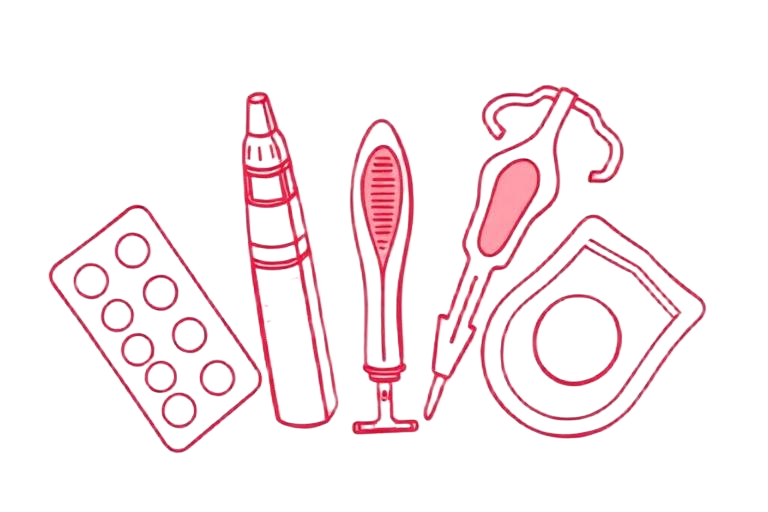
The NHS offers around 15 contraception methods, free. Some you take daily. Some last 3, 5, 10 years. Some have hormones. Some do not.
The big split: hormonal vs non-hormonal
Hormonal (pill, patch, ring, implant, hormonal coil/IUS, injection): work by stopping ovulation or thickening cervical mucus. Often regulate or lighten periods.
Non-hormonal (copper coil/IUD, condoms, diaphragm, fertility-awareness): no hormones in the body. Copper coil is the most effective non-hormonal method (>99%).
Long-acting wins for forgetfulness
The implant and coils are >99% effective because you cannot forget them. The pill is ~91% effective in real-world use because we are human.
What only condoms do
Protect from STIs. If you are not in a monogamous tested relationship, use them alongside another method.
Take the quiz to narrow your starting point — then take that list to your GP.
Want this guidance personalised to your cycle?
Create your free account